

Writing Language Objectives for Lucy Calkins, Step One: PANIC!
by Susan Zimmerman-Orozco
 Susan is an elementary ESL teacher in Montgomery County Public Schools and consultant with English Learner Portal. Rebecca Guzman is also an elementary ESL teacher in a local school system and consultant with English Learner Portal.
I started this blog as a way to “think out loud” about the struggle I’ve been having since fall as an ESL teacher supporting the Lucy Calkins writing program in K-Gr 2. I knew that my best bet was to develop academic language by creating language objectives and scaffolding instruction that explicitly tied student learning to the target writing output. HOW this is actually getting done is still very much a work in progress. As you read this post, I hope that you will think about your own challenges and successes you have had adapting academic language strategies to the LC writing program, and give me some feedback, suggestions, and recommendations on what has worked – and not worked – for you.
Help me out here. Last Monday, the Lucy Calkins’ teaching point in our second grade writing lesson, verbatim from the guide, was:
“Today I want to teach you that when writers do something new, they don’t just try it once and give up. Writers are bold too. You can try new things in your writing, even if they’re not perfect. Then you can see what you think. You can ask yourself, ‘Did it work?’ or ‘Should I try it a new way?’”
So tell me, readers, what’s the Language Objective?
SIOP training had been a “thing” at my school a few years ago, and several team members had been sent to training. However, in subsequent years several of the trained teachers cycled out to new schools and each fall the district served up another round of “critical” achievement goals and performance measures that filled our teachers’ plates to overflowing. The idea of creating and teaching language objectives faded away into “just another thing I don’t have time for.”
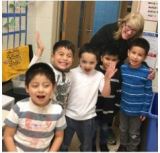 But as I reminded myself and my team last week, in a diverse school like ours (70% FARMS, 40% Hispanic, 40% AA, 55% ELL) all content objectives truly need to have accompanying language objectives that “articulate for learners the academic language functions and skills they need to master to fully participate in the lesson and meet the grade-level content standards (Echevarria, Short, & Vogt, 2008).” Feeling empowered, I promised my team at our weekly planning meeting that I would provide a language objective for their daily writing content objectives and create scaffolded lesson plans to support them.
Up to now, while I was getting better acquainted with the the Lucy Calkins program, I’d been supporting students classes by following up on earlier lessons that hadn’t “worked” for my English learners (ELs). Basically I re-packaged and scaffolded the same lesson classroom teachers had written in more visual and engaging ways, throwing in some appropriate academic language points, oral practice, sentence frames, and vocabulary along the way.
But now that I had hastily offered to deliver daily and meaningful academic language instruction, I realized I might have gone way outside my comfort zone. I panicked: What IS the academic language required for students to “make a bold move” and try things in new ways? And, was I the only person to find Lucy’s teaching points difficult to break down into language objectives?
I sought out trusted colleagues, and was relieved to discover I was not alone. Rebecca Guzman, an experienced classroom, SIOP, bilingual and ESL teacher helped me 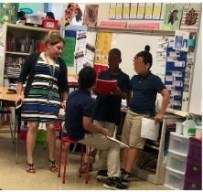 understand the disconnect.
“Her (Lucy Calkins’) thinking is that we are constantly introducing students to a menu of strategies they can apply to create a variety of writing genres; in other words, we are teaching them how to be writers not how to write. However, our English learners (ELs) need repetition and coaching to create productive written work, rather than a quick “I teach you-now go practice” approach.“
“Our elementary school ELs frequently come with a lack of background knowledge and writing experience in their own language, so it’s almost like we are rushing them through all of these strategies but not giving them enough time to practice and get good at one thing before moving on (quality vs. quantity). I worry that if they do not feel successful at something it will stop them from wanting to continue learning how to write much less how to be a writer. “
Knowing that I am not alone in my confusion about whether to address content or language was reassuring. Guzman writes weekly, not daily, language objectives, and further explained how she and her co-teacher approach the task: “I mostly focus on the actual content lesson activity to figure out what kind of language students will be expected to produce. I start by focusing on a specific language domain. Then I pull a language feature to focus on (i.e. grammar, vocabulary, etc..) followed by the language function (verb: explain, retell etc..) and then pick language supports that match the activity and/or student proficiency levels in the class.”
Her explanation helped me re-frame my question, “What is the language objective that supports “Writers are bold too. You can try new things in your writing, even if they’re not perfect,” to “What are the language objectives that will support the overall objective of Unit One: Lessons from the Masters Improving Narrative Writing.” Often the guide will give us a clue: In Grade 2, Unit 1, Lesson 3, for example, Stretching Out Small Moments, as Authors Do, it is clear we will need to focus on sequencing words.
But sometimes it’s not so obvious, as in my case of asking students to make “bold new moves?” In these cases we should go back to the unit objective: writing narratives, and review our students’ work to identify their academic language needs and, over the course of our unit planning, ensure that we have mini-lessons that will address all three of the WIDA Features of Academic Language: Linguistic Complexity, Language Forms and Conventions, and Vocabulary Usage across all of our students’ proficiency levels.
Easy peasy, right? I can’t say yet. I only just puzzled this out a few days ago. Stay tuned for my adventures in Lucy Calkins Language Objective Land, but more importantly, PLEASE PLEASE PLEASE, let me know what has worked for you. Or what hasn’t.
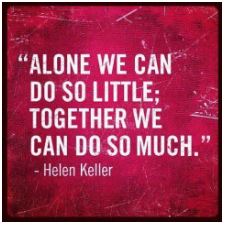 Like most ESL educators, I’ve attended training, read the word of experts – even talked to them, taken online courses, and attended my district’s workshops. But nothing – NOTHING – helps teachers more than the experiences of other teachers. I’m all alone in my school as I struggle to work this out; I hope you will share what you’ve tried, what worked, and other strategies and ideas you have tried. “Alone we can do so little. Together we can do so much.” My students need you, and there is so much left to do….
~~~~~~~~~~~~~~~~~~~~~~~~~~~~~~~~~~~~~~~~~~~~~~~~~~~~~~~~~~~
If you aren’t already part of our mailing list, please sign up HERE to receive freebies, announcements, and just to get to know us! Looking for new ideas and graduate credits? Visit our Online Professional Development School! Please visit the ELP website to meet the team and learn more about our services.

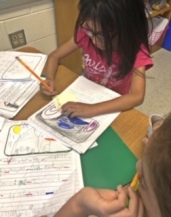 I looked at her new story pages. “Can you read me the first page?”
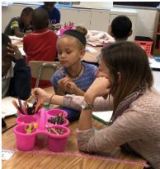 composing is an integral step in the writing process. Nonetheless, I could tell that Jessica was getting annoyed with my constant insistence that she have a plan. Nevertheless, I was determined, ‘So, maybe the interesting part of your story is later? What happened in the end? Were you really happy? Did the cat do something funny?”
 rock back and forth on my tiny chair in despair. I looked deeply into her little 7-year old’s eyes, which clearly were not seeing what the big deal was all about, and pleaded with her, “Come on, Jessica, isn’t there ANYTHING interesting in your life you could write about?”
 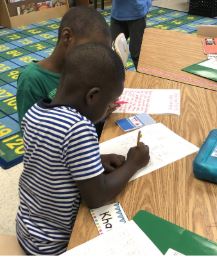 I hope you will travel with us as we puzzle out the best way to use Lucy to help our ELLs – and all of our students. But even more importantly, I hope you will share your own challenges, your successes, and your suggestions and recommendations for using Lucy to show these, our most fragile, learners that not only can they succeed as writers but also excel!
 If you aren’t already part of our mailing list, please sign up
 each unit, trying to cover a lesson a day. A half-time ESOL teacher, I spent most of my time with students playing catch up. I pulled small groups, tried to revise their ragged pages of haphazard sentences, and badgered my colleagues. What am I actually supposed to do with Lucy as an ESOL teacher: teach them the writing process a la Lucy Calkins, or teach them how to fix what they’ve already written?
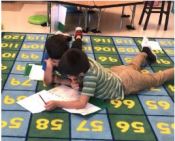 June…my ESOL kids could write! Lots and lots of writing! Was it anywhere close to perfect..nah. We are, after all, a work in progress, but I don’t remember ever before seeing so much actual writing from second grade English language learners at the end of the school year. Wow! Then this fall, another epiphany: our new second graders, who already had a year of Lucy Calkins under their belt…they started off the new year actually…writing! Lots and lots of writing!
 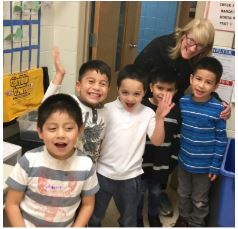 ESOL teachers in our district, I decided that the best way to address the needs of my ELLs, regardless of their level, was to collaborate and co-teach with their classroom writing teacher. In this manner, we could hopefully anticipate academic language needs before they have steamrolled into an insurmountable barrier to learning.
 englishlearnerportal.blog