

Frank Bonkowski is an educational writer, English language teacher, and e-learning specialist, passionate about learning and teaching. As a lover of writing, Frank has a twofold mission: to teach English learners to write better and to train language teachers in teaching effective academic writing. He was a teacher trainer at several universities, including McGill, Concordia, and TELUQ, a center of distance education. We are thrilled to have Frank as a member of our online course community at English Learner Portal.
~~~~~~~~~~~~~~~~~~~~~~~~~~~~~~~~~~~~~~~~~~~~~~~~~~~~~~~~~~~~~~~~~~
In today’s post I want to introduce you to a new three-credit graduate course in teaching writing. I’ll give you a peek into one of the lectures in Module 1, “Problems students face in learning.”
JOIN me on June 28 for a 2-hour online writing workshop
New Online professional development course
Teaching Writing to Intermediate and Advanced English Language Learners is now available. This 3-credit graduate course is aimed at beginner and experienced English-language teachers who want to improve their knowledge and skills in teaching academic writing.
Teaching Writing, a multimedia course containing five modules, is your complete guide to teaching academic writing. Each module has a short video introduction, several recorded lectures, an accompanying tape script, a reading, an interview with a writing expert (in three of the modules), and a self-assessment exercise. To obtain university credit for the course, participants must complete five quizzes and two assignments.
A peek inside Module 1
 The first module explores the context for teaching and learning academic writing to adolescent English language learners. Topics include some effective ways for teaching academic writing, problems English language learners face in learning, the distinction between comprehensible input and output, and an overview of the WIDA writing rubrics with Kelly Reider. In today’s post, I want to share with you parts of Lecture 2.
Teaching Writing
Module 1: Problems student face in learning
External issues
 How well do you know your students? Experienced teachers realize that they have to take the time to get to know their language students as human beings. I have always taken the time to relate to my students, to understand where they are coming from, to learn about their interests and hobbies, and to ask about what they are good at.
Language teachers need to understand the external and personal issues in the lives of their students, so well described in “Teaching writing to diverse populations” (Fowler). Let’s look at three external issues.
First, learning to write well is challenging cognitively and linguistically, not only for English language learners but also native speakers of English.
Second, some English language learners come from disadvantaged homes at the lower end of the socio-economic ladder. Many students work part time which cuts into their study time. In addition, some of them have learning disabilities. In the school where I teach ESL, over 10% of the students are dyslexic or have learning difficulties often related to stress.
Third, English language teachers may not be up to the task. They may lack the pedagogical knowledge as well as effective strategies and techniques to teach academic writing. They could benefit from professional development courses to upgrade their teaching skills, such as this course.
Furthermore, English language teachers may not have access to good resources. They may not know how to implement consistently academic writing into their program.
Let’s now move on to three personal issues or problems that English language learners may have (Fowler). Learners often lack the knowledge and skills to write well. Even more importantly, they may not be motivated to write well or write at all.
 Personal issues
Knowledge problems
I teach academic writing to intermediate and advanced ESL learners. Yet many of them do not know what good writing is. They do not know how to start to write, thinking that just putting ideas on paper pell mell is good enough. They need to improve their knowledge of vocabulary—using synonyms and antonyms for example.
Moreover, students often have a poor sense of sentence structure and variety. Learners may know who the latest pop stars are, but they have limited knowledge of current events or social issues in general.
Finally, learners are not always familiar with some of the purposes of writing, such as to persuade or inform readers.
Skill problems
Let’s move on to skill problems that many English language learners face (Fowler).
A common problem I see among learners is that they are not interested in planning. They fail to plan which effectively means that they plan to fail.
Another problem is that they do not how to revise their writing. It is like pulling teeth to get them to reflect on their writing. Another issue is that they do not know how to self regulate their ideas and actions. It is a metacognitive skill that they have perhaps never been taught.
As most teachers know, learners have limited attention spans. That is not surprising. The latest research shows that the attention span of adults is only eight seconds. As I mentioned before, many learners have either visual or motor disabilities.
Motivation problems
Let’s have a brief look at some of the motivational issues that English language learners have (Fowler). For example, they have rarely been taught to develop writing goals. So they do not know how to achieve success. Some think that they fail to write well because they are not smart enough. They may have this erroneous self-belief that they can never succeed.
In addition, many learners are not very persistent in their attempts to write well. They are easily discouraged by constant failure.
What are some effective ways to teach academic writing?
 English language learners need to be taught how to write effectively. They need to know how to achieve their goals within a given context. Learners need to be taught how to express themselves effectively. They need to learn how to write well-organized, clear texts.
Here are three effective strategies for teaching writing that we will explore further in later lectures (Graham, 1-2).
- First, teachers should explicitly teach learners appropriate writing strategies. They should use effective instructional models, such as Engage-Study-Activate that we look at in lecture 2.1 (Harmer, 25-29).
- Second, teachers should help learners develop their reading comprehension skills to become better writers. Reading can be an important tool to develop writing skills (Writing). Both reading and writing can help learners think and learn better. Teachers should show learners good texts, highlighting their outstanding features.
- Third, students should receive regular feedback to keep track of their own success in writing. This feedback can take the form of teacher to students, students to students, and student self-reflection, using for example the Virtual Writing Tutor. More about this online tool in lecture 5.5.
Other strategies that we can mention include teaching grammar explicitly, providing challenging activities, and helping students build their vocabulary (Writing).
In Teaching by Principles, Brown recommends teachers get students to:
- Use the practices of “good” writers, such as following an organizational plan as they write
- Do prewriting activities, such as conducting outside research or discussing a topic or question.
In the next blog post, we will take a peek into one of the lectures in Module 2, “What is successful language learning?”
JOIN me on June 28 for a 2-hour online writing workshop
~~~~~~~~~~~~~~~~~~~~~~~~~~~~~~~~~~~~~~~~~~~~~~~~~~~~~~~
Do you receive the English Learner Portal monthly newsletter? Sign up HERE! Visit our online professional development school HERE! Want to know more about us and what we do? Visit our website at https://englishlearnerportal.com.


 cafeteria had a different type of table one month out of the year. From second grade on up, I began to practice fasting during the month of Ramadan. To fast during the month of Ramadan means to not have any food or drink from sunup to sundown. At this young of an age, I didn’t practice it to its full extent. Sometimes I fasted half days, other times I completed whole days. The “fasting table” that I shared with my Muslim peers was placed smack dab in the middle of the cafeteria, so the cafeteria ladies could keep an eye on those “fasting Arab kids”. Yes.. I said it.. the fasting kids (who were not eating lunch) sat in the
  When answering these questions, it is important to think about the science behind them. “The brain’s two prime directives are to stay safe and be happy.” (Hammond 2015) With that said, learning is difficult when a child is preoccupied about their safety. Yes, physically safety is key. But emotionally safety, can also really impact a child’s learning. I attended a school where teachers really did their best to make me feel secure about who I was. With this, I was able to focus on learning because I didn’t feel that my identity put me in jeopardy.
 students really express themselves. Lots of teachers are trying something new by having students create “vision boards”. Vision boards not only teach teachers about a student’s background, they also teach teachers about students’ goals. Students can use the vision board later to refer to their own goals. A vision board can take form in any way. It just has to be goal oriented.
  When these experiences are being provided in the classroom, it gives the child a pleasant memory of their school experience. Valuing that child goes a long way for a lifetime of confidence in who they are. Going back to brain science, the schema that is built for a child of experiences in the classroom will help reduce anxiety towards future classroom experiences. It will also help the child overcome adversity when they experience it because a teacher helped build a foundation of confidence.
 community. My conversations with my students taught me so much about traditions. I continued to engage in them. Years later, I ended up working in a Middle School fifteen minutes away in Albany Park that served a large Hispanic community. The school had a significant Puerto Rican population. My conversations a decade prior to that with students helped me build relationships in my new environment as a language arts teacher then later as a Dean of Instruction. Students felt safe with me because I tried to learn their culture and bring it into the school and classroom.

 Translate your parent newsletter – and all information going home to parents! – into the major languages of your school community. This includes information about field trips, after-school programs, and extra-curricular activities.
 the community, particularly for emergency situations.
 Within a week of our arrival, Muzyen and her family greeted us and welcomed us. When I came home from errands, they eagerly kept the kids while I shuttled groceries up the three flights of stairs. Muzyen understood my younger daughter’s nervous cries and stood singing to her in the hallway as they watched me work. When her daughters were home, one of the daughters would keep my girls entertained while I cleaned the house or cooked dinner – teaching them songs, hand-games, and stories. When my family returned from outings and clomped and chattered our way up the stairs, Muzyen’s family would open the door to talk with us and visit with our little kids. Occasionally, on long afternoons, Muzyen would break up the monotony of my day by inviting me for tea. She offered sweet pastries and savory dishes as we fumbled through small-talk and conversation.
 everyone prepared for a big event. The neighbors would clean their homes top to bottom – so thoroughly that they would even hang their carpets over the balconies to dry after hand-washing them. The community scoured the local markets and stores for specialty foods they would use for traditional meals, toys to give their children, and outfits to wear for the festivities. Furthermore, people stocked up their kitchens as shops would be closed for a few days.
 Muzyen knew what it was to be an outsider. Because of that, she invited us to join her family’s festivities. One of the more intimate components of their celebrations was a breakfast to break their fast. Muzyen had already graciously included our family at a few of their iftar dinner meals. The breakfast marked the beginning of a three-day celebration. This was more of a family affair. Normally new friends or neighbors might visit on the third day, but in my observation not typically the first breakfast.
 Laurie Meberg has been working cross-culturally for seventeen years as a teacher, community developer, and refugee liaison. She learned two languages through immersion and tried to learn a third through friendships in a multicultural community. She has frequently helped emerging English speakers by being a conversation partner – mostly over cups of tea. She lives in Colorado with her husband and three children.
 No doubt, many of you currently have students in your classrooms who have difficult names to pronounce or different spellings of popular names. The challenge when working with many ELL students is being able to connect with the students on an individual level despite the language barrier. Learning their names and being able to pronounce them correctly is very important for ELL students—especially for new, incoming students. Names are representations of who we are and where we come from. For many students, the significance, spelling, and pronunciation of their name means more to them now that they are in a new, unfamiliar environment. This is not to say that many students won’t change their name, because many will. They may modify their name to include nicknames or even slightly change the spelling of their name, and that is okay because it is their choice. So, for now, embrace those difficult-to-pronounce names and practice rolling your Rs because I promise that, as the teacher,
  counselor, or school administrator, you being able to correctly say your student’s name means more to them than you will ever know. It is recognizing and accepting them for who they are and what they represent. Names make up who we are; they are part of our identity, and our identity is unshakably tethered to our self-esteem. Promoting positive environments where students feel accepted and connected can help promote school success for the English language learner.
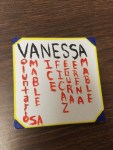 Included below is a great activity that promotes name association with positive personality characteristic traits. Students can work on beginning to identify positive aspects about themselves and work on being able to share them out loud with each other in a classroom setting.
 I’d love for you to share how this activity worked for your students and/or how you modified the activity to make it even better. Drop us a note at
  Graciela Williams “Gracie” is a licensed bilingual school social worker in Annapolis, Maryland. Gracie currently works with newcomer students and runs several social skills groups around the county. She specializes in working with international students who have experienced trauma. She has done extensive work incorporating and facilitating student and parent reunification groups within the school system. Gracie has worked as an Adult ESL teacher and program manager for literacy centers in South Carolina and Colorado. She has a bachelor’s degree in counseling from Bob Jones University and a master’s degree in social work from the University of New England. Gracie is also an Adjunct Professor for Goucher College, where she teaches a graduate level seminar course regarding At Risk Students, and she is an Adjunct Community Faculty for The University of New England providing field instruction to current MSW students.
 these events, students and/or their families typically set up tables to highlight their countries and cultures and the rest of the students and families walk from table to table sampling food and looking at artifacts and maps. While organizers of these events have good intentions and aim to honor their students’ cultural backgrounds, sometimes these events can seem
  tokenistic. How can we build family comfort in schools throughout the school year? With 79% of teachers in the U.S. being white* and 25% of students being children of immigrants, getting to know the cultural backgrounds of students requires a deeper dive.
 There are often two goals of international nights. The first is for students to learn more about other cultures and the second is for teachers to learn more about the backgrounds of their students and their families. With those goals in mind, what are 10 possible alternatives to international night?
 Thanksgiving is almost here, and, undoubtedly, your classroom is buzzing with excitement for the soon-approaching break. You might find that you and your students have finally found a steady routine. You may even feel that your students have some sense of your classroom rules and requirements, even if many of those aren’t exactly followed to a “T.” Your sense of classroom “normalcy” is at its peak when, suddenly, you get word that you will have a new student. Not only will you have a new student, but it will be a new student that speaks limited English. You have been here before and know the difficulty of adding a new student into the mix, but a student that speaks limited English is a step further. The classroom dynamic changes, and the educational “catch up” game quickly follows. This scenario is all too common in many schools across the U.S. Teachers and school administration begin to identify the challenges of students who start school mid-year, but they soon find themselves focusing on classroom dynamics and making sure that the student meets certain targets for educational purposes. An area that can be easily overlooked is the newcomer’s social and emotional well-being. Adjustment in the classroom involves much more than the student’s physical and mental understanding of school and classroom norms.
 during school adjustment periods. Although the needs of the students increase, the school’s ability to provide adequate resources and staff to meet the needs of the students remains limited. Even with limitations, schools can still make sure that all of the newcomer’s needs are met in order for the student to be successful in the classroom. Incorporating social skills lessons within the classroom can promote an environment where newcomer students share experiences, establish connections, and practice their English abilities.
 Beginning conversations at the lunch table or at recess can be intimidating, but providing an in-class activity, where students share in small groups, can help promote effective communication and relationship building. It allows the newcomer to participate in the lesson all while learning essential vocabulary skills. Social skills lessons can help promote English by having newcomers practice their English skills within the four domains: speaking, listening, reading, and writing. Social skill lessons can also help the teacher understand their student’s background in a non-intrusive manner. Understanding the student’s past experiences can shed some light on educational learning experiences and current levels of social, emotional, and physical adaptation to a new learning environment.
 Swimming is my weakest event because I never learned to swim correctly. Fortunately, I am a better writer than I am a swimmer.
 Course features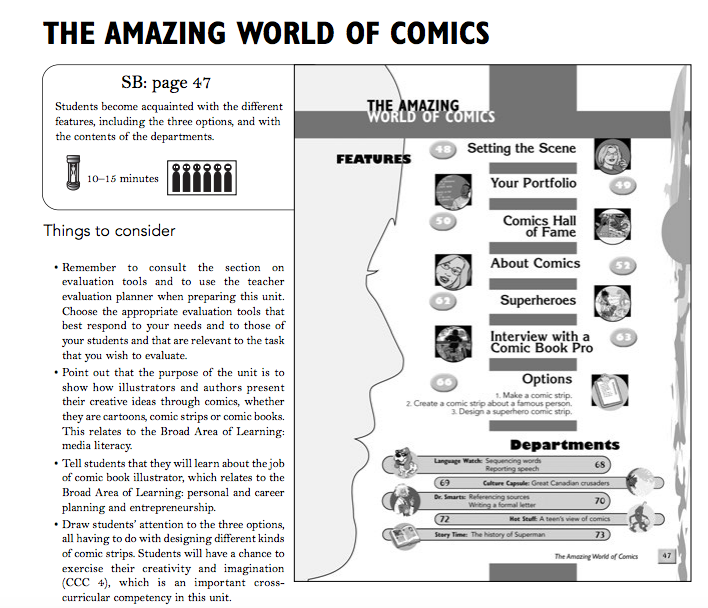

 Picture sorts that require students to categorize and classify items will give you insight into how a student is thinking and processing. Sorts such as living or non-living, colors and shapes, or land features and map elements will allow students to share some of their background knowledge visually. There are a number of sample cognitive sort and match cards in our free

 This blog post is written by guest contributor Laura Gardner. Laura’s bio can be found at the end of this post.
 families feel welcome regardless of what country they’re from, what language they speak, and so on. Regardless of one’s feelings on the immigration debate, it is important that we check our politics at the door. So smile! Greet parents as you would want to be greeted, even if there is a language barrier. Feelings can easily be conveyed through body-language so smile and say hello! Even better – learn a simple greeting in another language or two.
 The second most important thing teachers and other school personnel can do is to provide newcomer parents with some kind of orientation. There are so many things that seem obvious to us, but could be new to some families. For example, school busses are yellow. Families may not know these sorts of things, so explain everything! Be sure to also explain expectations around parent involvement because in many countries, this expectation or practice doesn’t exist. In fact, in many countries it is considered disrespectful if a parent visits their child’s school because it is seen as challenging authority. Orientations may be delivered in person or by video (for an example,
  Probably the most reasonable temporary fix is to see if any parents or bilingual community members can volunteer their services. However, please note this really should just be temporary solution because anyone interpreting in a school setting really needs to have their language skills assessed and needs to be trained. Just because an individual speaks two languages does NOT mean they know how to interpret. Interpreting is a skill set of its own that requires practice! Furthermore, language volunteers should go through whatever procedure is typically used to screen volunteers and to ensure confidentiality.
 englishlearnerportal.blog